
The practice
A long-term way of caring for the body and mind, working from the inside out.
What it is
Iyengar yoga is a precise, alignment-based method developed by B.K.S. Iyengar. Postures are held for longer, with careful attention, and props let each person practise safely at their own level.
- Ropes A rope wall to lean on, hang from and stretch against.
- Blocks Bring the floor closer.
- Belts Extend reach and hold a position.
- Blankets Lift, cushion and support.
- Benches Support the back and open the chest.
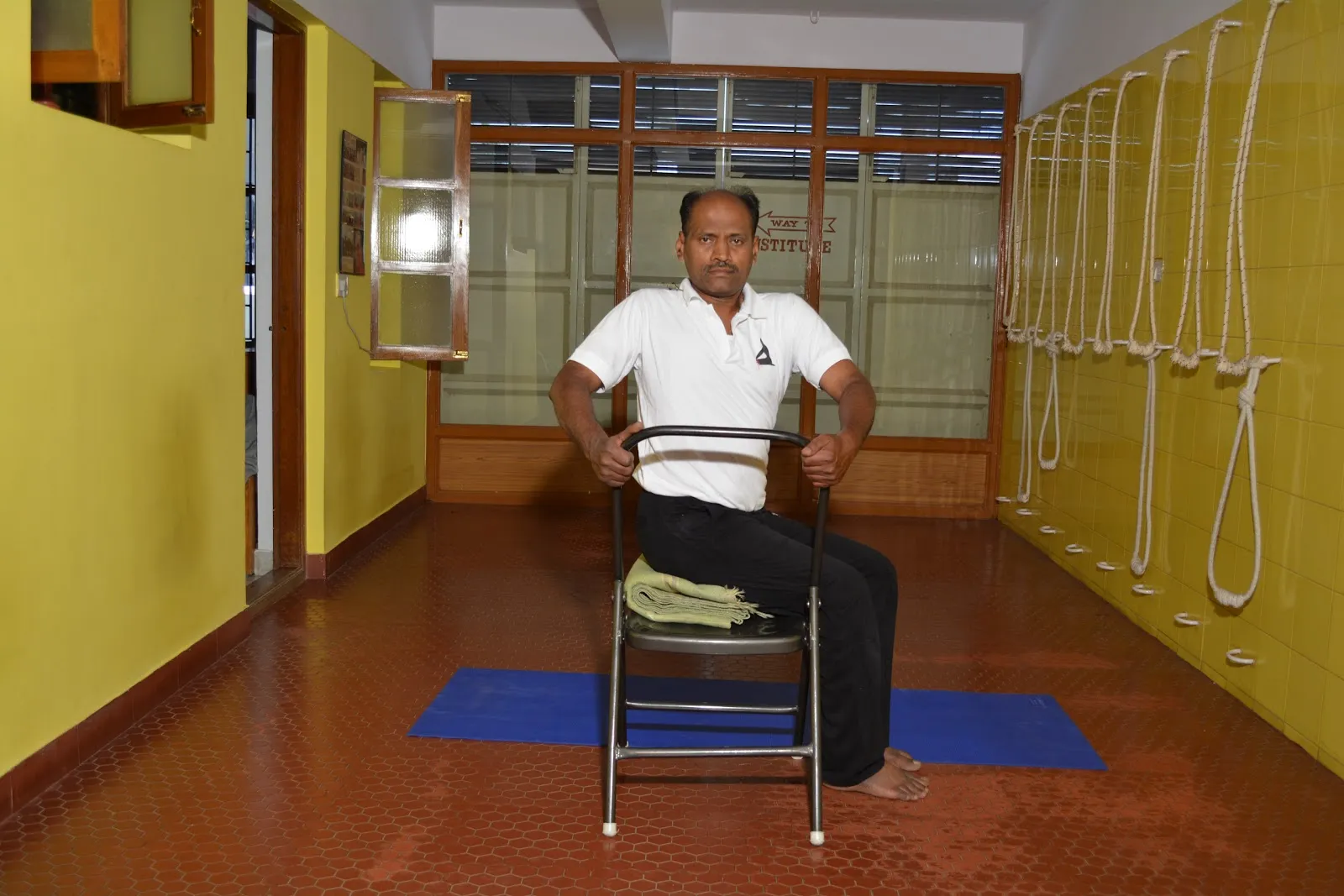
- Chairs Make a posture steady and safe.
Why it is different
Gyms, sports and many styles of yoga have their own approach and their own value. This practice asks something different: less about how the body looks or how much it can do, more about how it functions inside.
Its focus is the internal organs, the breath and the nervous system. Its pace is slow, and its results are measured in months and years rather than days.
Starts at the surface: strength, shape, how the body looks. A fine place to begin, with a value of its own.
Starts at the centre, with breath and mind, and works outwards through the nervous system and the organs, to the muscles, the joints and the way the body moves.
How it works
Practice works on several levels at once.
-
Breath and mind come together
Held with steady intensity, but without strain.
-
Attention reaches below conscious effort
The practice goes deeper than anything you can do on purpose.
-
Precise positioning lets energy flow
To every part of the body, the internal organs above all.
-
The body is guided back, over time
Towards its natural, healthy state.
The eight limbs of yoga
Patanjali's Yoga Sutras define yoga as chitta vritti nirodha : the stilling of the movements of the mind. They describe eight limbs, or ashtanga , that lead there. The practice taught here is rooted in them. Posture and breath are two limbs of the eight, not the whole of yoga.
- 1 Yama Restraints Moral and social conduct: non-violence, truthfulness, not stealing, restraint, non-possessiveness.
- 2 Niyama Observances Disciplined personal conduct: purity, contentment, effort, self-study, surrender.
- 3 Asana Posture Adjusting the body in postures, with steadiness and ease.
- 4 Pranayama Breath The regulation of breath.
- 5 Pratyahara Drawing inward Turning the senses of perception inward.
- 6 Dharana Concentration Attention held on one point.
- 7 Dhyana Meditation Attention flowing without a break.
- 8 Samadhi Absorption The ultimate state of self-realisation.
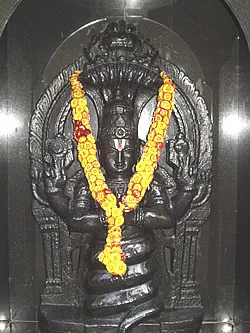
योगेन चित्तस्य पदेन वाचां
मलं शरीरस्य च वैद्यकेन ।
योऽपाकरोत्तं प्रवरं मुनीनां
पतञ्जलिं प्राञ्जलिरानतोऽस्मि ॥
yogena cittasya padena vācāṁ malaṁ śarīrasya ca vaidyakena
yo'pākarottaṁ pravaraṁ munīnāṁ patañjaliṁ prāñjalir
ānato'smi
Let us bow before the noblest of sages, Patanjali, who gave yoga for serenity and sanctity of mind, grammar for clarity and purity of speech, and medicine for perfection of health.
A rope has three strands
The method brings three practices together, and they are not taught apart.
Asana
The postures: held longer, with precise alignment and the support of props.
Pranayama
The breath, practised to calm the nervous system and steady the mind.
Meditation
Attention turned inward, so that body, breath and mind work as one.
Where the practice reaches
Because it works from the inside out, the practice pays attention to far more than the muscles. Choose an area to see what it looks at.
Breath and attention are brought together so the nervous system can settle. Stress and restlessness are where many students begin.
It takes time
The essence of the practice is grasped by practising with Narayan Sir over months, not by reading about it. This is not a quick fix, and it does not pretend to be.
- A day
- A week
- Months Students begin to grasp the essence.
- Years The body guided back towards its natural, healthy state.
- Decades Teaching in Vijayanagar since 1988.
Health and the practice
Many students come with long-standing pain, stiffness or stress, and the practice is adapted to each person's needs. Its therapeutic side supports the body; it does not promise to cure.
It works alongside medical care rather than replacing it. If you are being treated for a condition, keep your doctor informed, continue any medication as prescribed, and change it only on your doctor's advice.
What to expect
Come to learn, not to perform. A hall with ropes on the wall, blankets and benches to hand, and a teacher who watches closely.
Questions
Who can practise?
People of any age. Children can be introduced to yoga playfully, but should never be forced, as that can harm the spine. For older people, yoga can help when the body's own recovery slows.
Is it tough?
Not tough, but demanding. It is not for the casual practitioner: you are asked to be involved fully, in body, mind and emotions. And a stiff body is no obstacle. With regular practice the effort becomes effortless.
Is it only postures and breathing?
No. Postures and breath are two of the eight limbs of yoga. The method teaches how all eight work together. See the eight limbs .
Do I need to have done yoga before?
No. Props such as ropes, blocks, belts, blankets and benches let each person practise safely at their own level, beginners included.
What if I am not flexible or strong enough?
Flexibility and strength are what the practice builds. They are not what you need to arrive with.
I have an injury or a long-standing condition. Can I come?
Many students do. Tell Narayan Sir about your health, so the practice can be adapted to you, and keep your doctor informed. The practice works alongside medical care.
How is this different from a gym, or other kinds of yoga?
Each has its own approach and its own value. This practice works from the inside out: on the organs, the breath and the nervous system, more than on how the body looks.
How long before I notice a difference?
The results are measured in months and years rather than days.